
Siddi Dance: A Stalwart & Robust Bequest of Cadence, Fortitude & Tenacity aesthetically fusing Savannah & Indian heritage
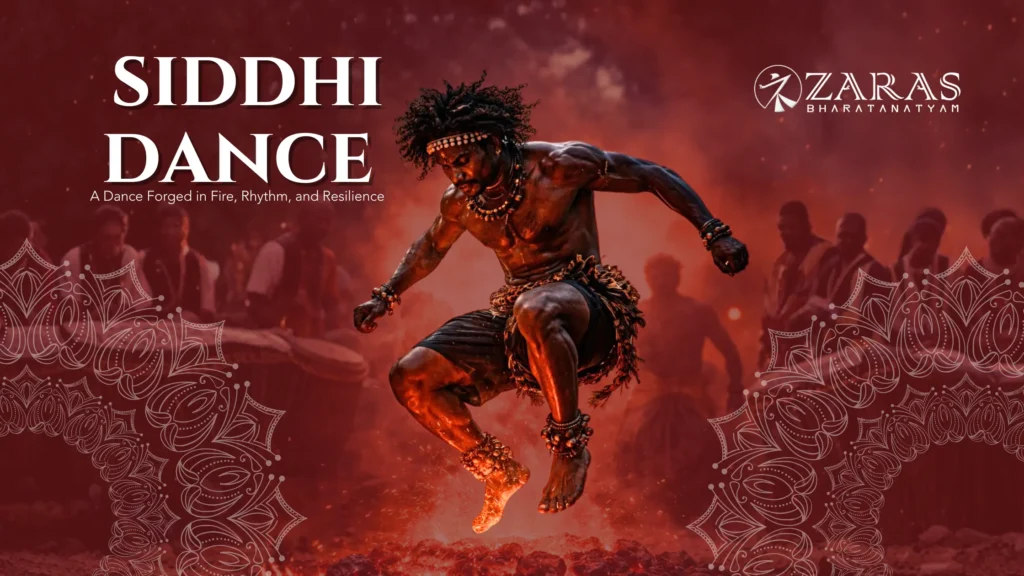
Siddhi is a power packed and dynamic dance form which is zealously and assiduously staged by the siddi or sheedi community of Karnataka. This community is splayed and sprawled over some of the major South and North
West States Karnataka, Gujarat and Maharashtra. They have a very intrinsic and meticulous historical track record which adheres and yokes them with Bantu Speaking people from East Africa. Their advent to India encapsules punctilious and fastidious strands and nuances of their origin.
It is documented that siddhi people set foot on India between 13th and 19th century as traders, mariners, and serfs of military onslaught by Portuguese and Arab merchants. Within the three centuries of existence their original and native African rhythm got beautifully and artistically permeated into the very essence of aesthetic mellifluous hymnal sufi chords. Though they were very ardent,fervid and adamant in retaining their musical tradition they were rather open and broad in absorbing and embracing the linguistic and religious paradigm of our country.
The siddhi dance in the first instance was titled and termed as mushira Nritya. Its origin was dated back to nearly threehundred centuries. In those days it’s executed as a vivacious celebration to honor the post hunting expedition and also in another realm it is staged as a medium to delight and enthral the rulers. Analysing the occurrence of the present cultural scenario this dance form is paraded as an emotional and aesthetic embodiment of their Indo African cultural confluence primordially flashed and exhibited before the audience during the festivals like Aadi Mahotsav.
Dancing formation, movements, rhythm and coordination are unequalled, unsurpassed and unprecedented in the annals of the dance tradition. For example, while dancing , daring and attempting to crush the coconut, that is hurled and tossed skywards, with their bare head, also leaping valiantly with the bare feet on burning embers that would scorch their feet. This daunting feat unearths and unravels their spiritual and physical dimensions.
The dance is totally molded in the texture of coro pregon format. The strategic moves are composed in a frenzied, frantic, feverish and primordial fashion incorporating and interweaving athletic and acrobatic trampolining, gyring and labyrinthine footwork. The dancers echo and reverberate the motions and movements of the beasts of the Savannah moor and Indian wilderness, which testifies their inseparable union with nature.
Siddhi Dhamaal is the proven fact of the binary identity. As the lyrics bear testimony to the Gujarati and Urdu languages and the instruments, music and the vital energy entombed are exclusively and wholly of African origin. Considering all these facts it’s needless to say that the very prime matter and substantial form lies in the rhythmic instruments wielded viz mushira or mushindo, nafir, dhamaal,mai mishra. These devices are immensely unique, the kind of which cannot be traced in any other rhythmic rendering in India.
It is a dance form that is manifested and represented through the enrapturing, mesmerizing and transfixing amalgamation of muscle and music.
